How to Get Into Construction Safety Without a Degree | Texas

Mike Sanchez
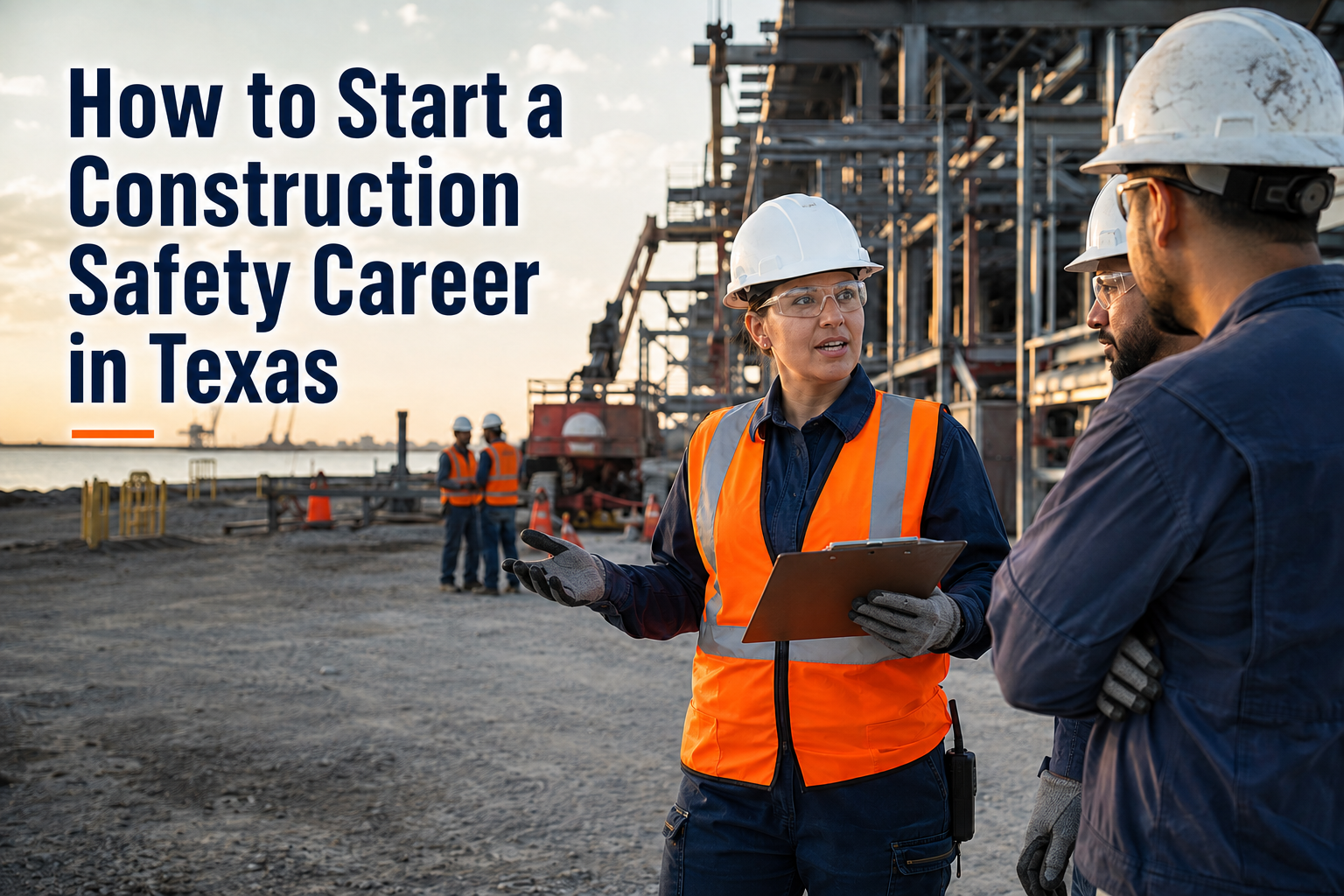
How to Start a Construction Safety Career in Texas Without a College Degree
Do you want to work in construction safety, but you do not have a college degree?
You may be more qualified to start than you think.
Many people enter the safety field after working in construction, refineries, industrial plants, warehouses or other hands-on jobs. Others start by taking safety classes and building their experience one step at a time.
You do not have to know everything before you begin.
The first step is learning what safety workers do, which certifications employers may look for and how to get real jobsite experience.
Can You Become a Safety Technician Without a College Degree?
Some safety manager and high-level professional positions may require a degree. However, many entry-level safety jobs focus on training, certifications, jobsite knowledge and experience.
Depending on the employer, you may be able to apply for positions such as:
- Safety attendant
- Safety helper
- Entry-level safety technician
- Fire watch
- Hole watch
- Safety observer
- Construction safety technician
- Field safety representative
- Permit attendant
Every company has different requirements. Completing safety training does not guarantee that you will be hired, but it can help show that you are serious about entering the field.
At Rig Right Texas, our program is built for working adults, including students who are starting in safety and do not already have years of experience.
What Does a Construction Safety Technician Do?
A safety technician helps workers understand jobsite rules and identify hazards before someone gets hurt.
The exact duties depend on the company and worksite, but a safety technician may help with:
- Inspecting work areas
- Finding unsafe conditions
- Completing safety paperwork
- Leading toolbox talks
- Helping with safety meetings
- Reviewing Job Safety Analyses
- Checking personal protective equipment
- Watching work around heights or confined spaces
- Documenting incidents and near misses
- Helping crews follow site rules
- Communicating hazards to supervisors
- Supporting emergency procedures
Safety is not only about walking around with a clipboard.
A good safety worker must be able to speak with employees, explain problems clearly, complete paperwork and stay calm when something goes wrong.
What Certifications Do You Need for a Safety Job?
There is no single certification that qualifies someone for every construction safety job.
Employers may ask for different training based on the project, position and level of responsibility. Common requirements can include:
- OSHA 10
- OSHA 30
- CPR and First Aid
- Construction Site Safety Orientation
- Construction Site Safety Technician
- Construction Site Safety Supervisor
- Fire Watch training
- Confined-space awareness
- Fall-protection training
The Rig Right Texas Construction Safety Program provides OSHA training and support for the NCCER Construction Site Safety pathway.
The program includes training related to:
- OSHA 10
- OSHA 30
- CPR and First Aid
- CSSO
- CSST
- CSSS
- Hazard recognition
- Job Safety Analyses
- Pre-task planning
- Safety meetings
- Incident-investigation basics
NCCER describes its Construction Site Safety Program as a standardized program covering both the field and administrative sides of construction safety. (NCCER)
OSHA 10 vs. OSHA 30: What Is the Difference?
OSHA 10 and OSHA 30 are two different levels of OSHA Outreach training.
OSHA 10
OSHA 10 is generally intended to help workers recognize common workplace safety and health hazards.
It can be a good starting point for:
- New construction workers
- General laborers
- Helpers
- Workers who need basic hazard awareness
- Employees whose company requires an OSHA 10 card
OSHA 30
OSHA 30 provides more detailed training and is generally more appropriate for supervisors or workers who have some safety responsibility.
It can be useful for:
- Foremen
- Crew leads
- Safety technicians
- Supervisors
- Workers moving toward a safety position
OSHA explains that the 10-hour course is intended to provide workers with awareness of common job hazards, while the 30-hour course is more appropriate for supervisors or workers with safety responsibilities. OSHA also makes clear that Outreach training does not replace job-specific training that an employer may be required to provide. (OSHA)
Completing OSHA 10 does not make someone an OSHA-certified safety professional. Completing OSHA 30 does not make someone an OSHA inspector.
These courses provide safety education and a course-completion card.
The Rig Right Texas Safety Program includes both OSHA 10 and OSHA 30 training so students can build a stronger foundation.
What Do CSSO, CSST and CSSS Mean?
The NCCER Construction Site Safety pathway includes credentials designed for different levels of safety knowledge and responsibility.
CSSO: Construction Site Safety Orientation
CSSO provides an introduction to construction-site safety.
It can help students build knowledge about:
- Common jobsite hazards
- Personal protective equipment
- Safe work practices
- Hazard communication
- Basic safety responsibilities
This can be a starting point for workers who are new to construction safety.
CSST: Construction Site Safety Technician
CSST training goes deeper into the work performed by safety technicians.
Topics may include:
- Hazard recognition
- Safety inspections
- Jobsite documentation
- Safety meetings
- Work planning
- Incident prevention
- Working with employees and supervisors
This credential can help support someone who wants to move toward a safety-technician role.
CSSS: Construction Site Safety Supervisor
CSSS is designed for workers who are moving toward greater leadership and safety responsibility.
It focuses on areas such as:
- Supervising safe work
- Leading safety efforts
- Managing jobsite expectations
- Communicating with crews
- Supporting a company’s safety program
NCCER says its safety credentials are recognized by contractors and owners looking for trained on-site supervisors and safety technicians. (NCCER)
The Rig Right Texas Safety Program provides support for the CSSO, CSST and CSSS pathway.
Can You Start With No Safety Experience?
Yes, you can begin learning without already working as a safety technician.
You may need to start in an entry-level position while you build experience. That is normal.
Your first opportunity may be as a:
- Fire watch
- Safety attendant
- Helper
- Hole watch
- Permit attendant
- General laborer with safety responsibilities
These positions can help you learn how jobsites operate.
You may gain experience with:
- Personal protective equipment
- Toolbox talks
- Job Safety Analyses
- Work permits
- Housekeeping inspections
- Fall hazards
- Confined spaces
- Hot work
- Hazard communication
The important thing is to treat the first position as a place to learn.
Show up on time. Ask questions. Take notes. Learn the site rules. Pay attention to experienced safety workers.
Skills Employers May Expect Beyond Certifications
Certifications can help you qualify, but employers may also look at how you work with people.
A strong safety technician needs more than a stack of cards.
You should work on:
Communication
You must be able to explain a hazard without starting an argument.
Reading and Writing
Safety workers often complete reports, permits, inspection forms and incident paperwork.
Attention to Detail
Small problems can become serious injuries if they are ignored.
Confidence
You may need to speak up when work is unsafe, even when the crew is in a hurry.
Respect
Workers are more likely to listen when you treat them with respect.
Reliability
Employers need safety workers who arrive on time, stay alert and complete their paperwork.
Willingness to Learn
A certification is a starting point. You will continue learning from supervisors, employers and real jobsite experience.
A Realistic First-Year Safety Career Plan
You do not have to build your entire career at once.
Here is one possible path.
Step 1: Complete Safety Training
Start by learning about common hazards, OSHA awareness, hazard recognition, CPR, First Aid and construction-site safety.
Review the Rig Right Texas Safety Program to see the training options currently available.
Step 2: Build a Simple Safety Résumé
Include:
- Your safety training
- Your construction or industrial experience
- Equipment you have worked around
- Any leadership experience
- CPR and First Aid
- OSHA training
- NCCER credentials
- Languages you speak
Even if your previous job title was not “safety technician,” you may have experience that matters.
For example, you may have led toolbox talks, inspected equipment, trained new employees or completed work permits.
Step 3: Apply for Entry-Level Positions
Search for terms such as:
- Entry-level safety technician Texas
- Safety attendant jobs
- Construction safety helper
- Fire watch jobs
- Industrial safety technician trainee
- Refinery safety attendant
- Turnaround safety jobs
- Safety technician with no experience
Do not apply only to jobs with the exact title you want.
A fire-watch or safety-attendant position may help you gain the experience needed for the next opportunity.
Step 4: Learn on the Job
Pay attention to:
- How inspections are completed
- How safety meetings are led
- How incidents are documented
- How supervisors communicate with crews
- How permits and JSAs are reviewed
- How hazards are corrected
Ask experienced safety workers what helped them move forward.
Step 5: Keep Building Your Qualifications
As you gain experience, you may be able to pursue additional training required by your employer or industry.
Your long-term path could move from:
Safety Technician → Lead Safety Technician → Safety Supervisor
The path is not the same for everyone. Your progress will depend on your training, experience, work habits and the requirements of each employer.
Do You Need to Quit Your Job to Attend Safety Class?
No.
Rig Right Texas built its Safety Program for adults who have jobs, children and real responsibilities.
Students can choose:
- Night classes
- In-person training in Portland, Texas
- Live Zoom classes
- One required hands-on day for Zoom students
- Deposit and financing options
You can review the current schedule, cost and payment choices on the Construction Safety Training page.
Students attending in person can find the Portland training center at:
904 Memorial Parkway B
Portland, Texas 78374
See the Rig Right Texas directions and parking information before coming to class.
Do Safety Certifications Guarantee a Job?
No responsible training provider should promise that a certification will guarantee employment.
Hiring decisions depend on:
- The employer
- Your experience
- The job requirements
- Your background
- Your résumé
- Your interview
- Drug-screening requirements
- Worksite-access requirements
- The number of positions available
Training gives you knowledge and credentials. You still have to apply, interview and prove that you are dependable.
But waiting until an employer asks for a certification can cause you to miss an opportunity.
Getting trained can help you be more prepared when that opportunity appears.
You Are Allowed to Start Where You Are
You do not need a college degree to begin learning about construction safety.
You do not need to already know every OSHA rule.
You do not need to already be a supervisor.
You need a starting point, a willingness to learn and the discipline to keep moving forward.
At Rig Right Texas, we work with students who have been out of school for years. We work with parents, shift workers, experienced construction workers and people who are completely new to safety.
Our classes are designed to help you understand the material—not just sit through slides.
Start Your Construction Safety Training
You do not have to already work in safety to begin learning.
The Rig Right Texas Safety Program is available in person in Portland, Texas, or live on Zoom. Zoom students complete one hands-on day in Portland or Hubbard.
The program includes OSHA 10, OSHA 30, CPR, First Aid and support for the CSSO, CSST and CSSS safety pathway.
View the Safety Program and Reserve Your Seat
Need help deciding whether this program is right for you?
Visit the Rig Right Texas homepage to speak with a student advisor, or call or text 361-600-8957.
Your safety career does not have to start with a degree.
It can start with one decision to prepare yourself for the next opportunity.
Training and certifications do not guarantee employment, promotion, wages or acceptance by a particular employer. Each employer sets its own experience, education, background, access and hiring requirements.